THE SERVICE JOURNAL / LIFE AT HOME
Choose a smarter way to live at home.
A smart home can begin with a single frustration: too many remotes, a long walk to turn out the lights or rooms that never quite feel ready when you enter them. The useful starting point is what you would like to change. Premium Audio And Video helps you see how lighting, shades, entertainment and the home network can support those everyday moments, then choose how much belongs in your project.
What this means for your home
- Use the household’s busiest rooms and repeated tasks to set priorities.
- Combine shared routines with independent control for different people and spaces.
- Understand compatibility, everyday adjustments and future additions before choosing a system.
Start with the rooms that do the most
Think about where the household spends time rather than making a list of devices. In an open living area, lighting, window shades and television may all affect the same evening. In a study, the priority may be comfortable light and a dependable connection for work. A guest bedroom may need little more than clear, easily reached controls.
Write down what feels inconvenient in each space and how often it happens. A task repeated every day usually deserves more attention than a feature you might use on special occasions. This also helps distinguish a room that needs better control from one that needs different lighting, sound or network coverage first.
Premium can use those priorities to outline a focused starting point. The whole-home automation guide explains how compatible systems can share controls once you know which experiences matter most.
Explore whole-home automationBring things together with a purpose
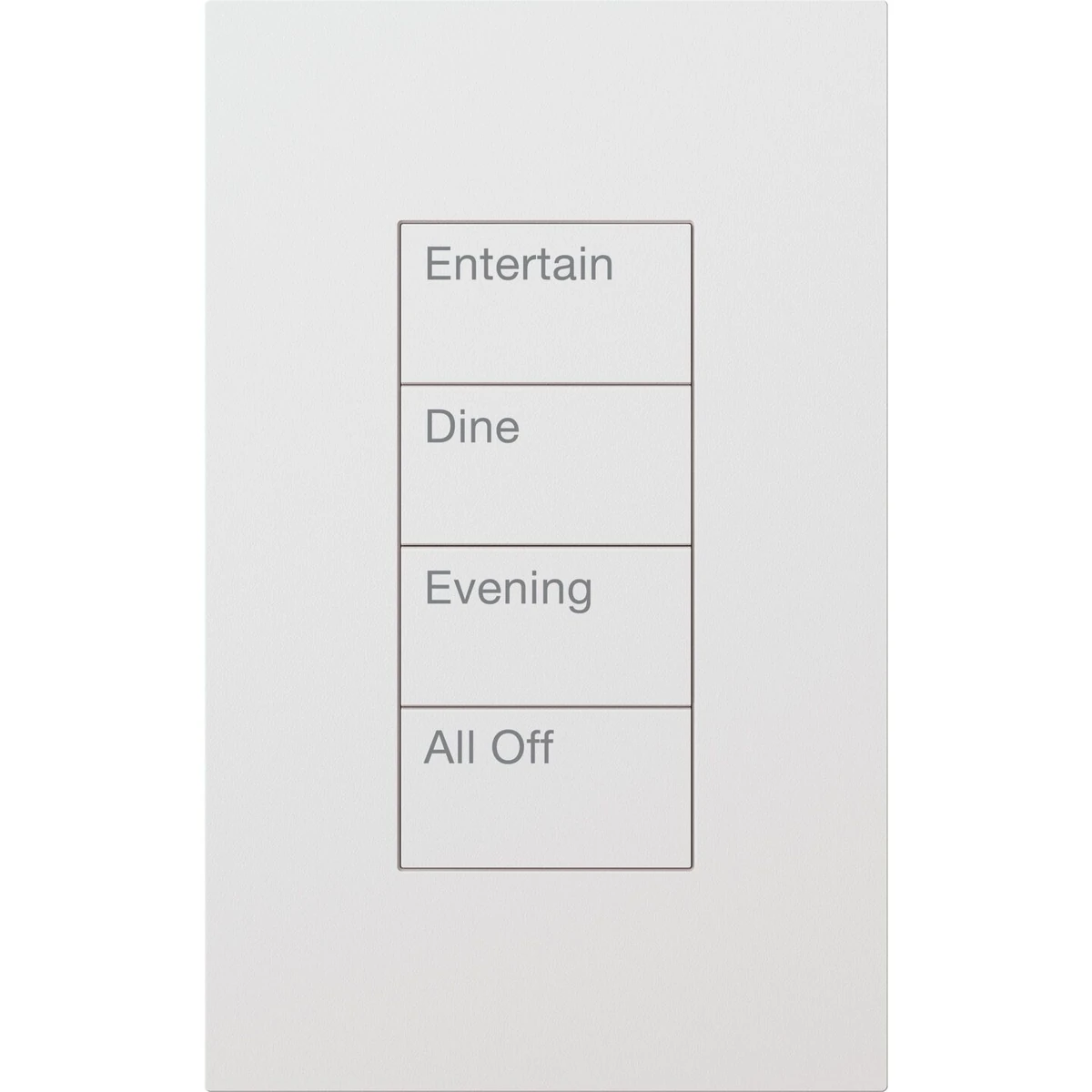
A shared control is useful when several actions belong to the same moment. Preparing the main rooms for guests might involve lights, shades and music. Leaving for the day might call for a smaller set of changes. Each routine should have a clear meaning, so pressing a button feels predictable.
Consider who else is at home before deciding what a whole-house command includes. Turning off the living areas should not unexpectedly interrupt someone working upstairs. A bedroom may need its own schedule, and the terrace may need separate volume even while sharing the music indoors.
You can combine familiar starting settings with individual adjustments. That balance keeps shared spaces convenient while respecting different preferences. Premium helps identify which actions belong together, which rooms should stay independent and which routines are better left to a person choosing in the moment.
Choose controls you will actually reach for
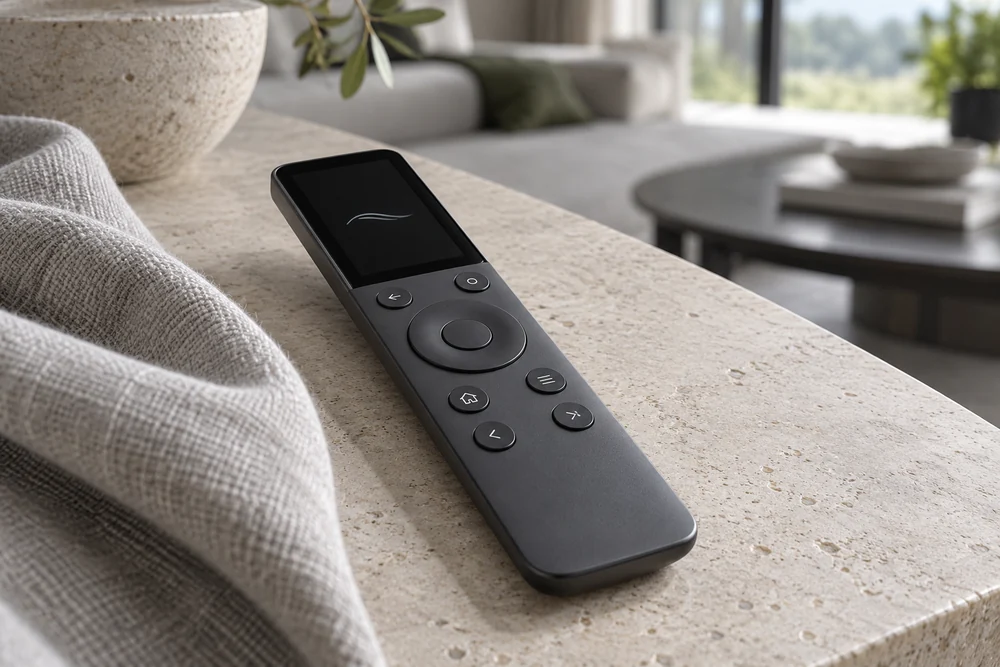
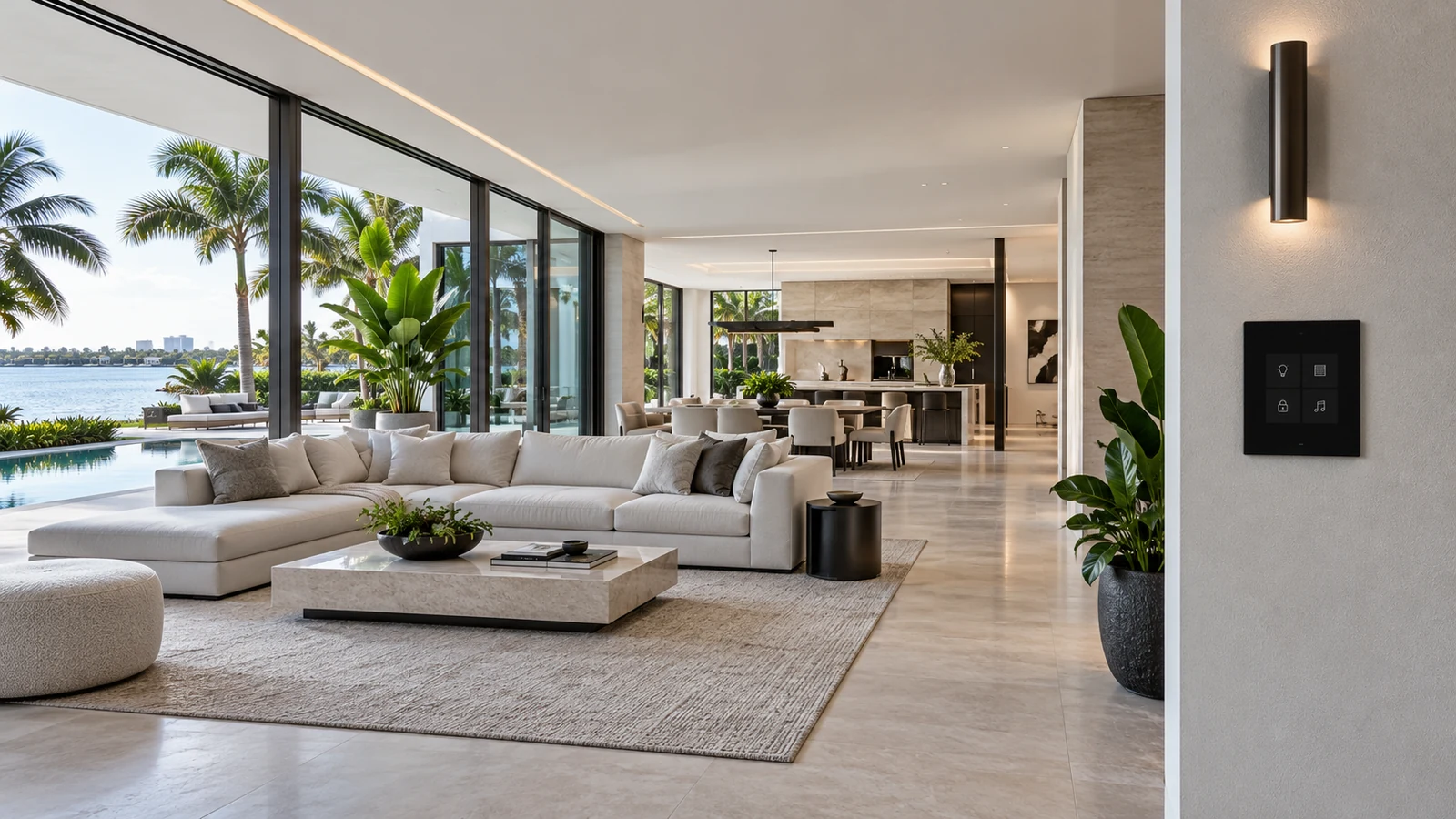
Where you use a control matters as much as what it can do. A wall button suits walking into a room. A remote belongs near the sofa. An app can be convenient for checking several spaces without visiting each one. There is no reason every task has to use the same interface.
Picture a visitor finding the light switch or a family member starting the television without help. Everyday actions should be easy to recognize, while occasional settings can sit elsewhere. Clear room names and a small number of meaningful choices make a system easier to understand.
Ask how changes will work after you have lived with the home. You may want a different evening light level or a revised shade schedule. Premium can explain what you can adjust yourself and which changes call for programming, so ownership feels as considered as the initial design.
Match the plan to your home’s next chapter
A finished home, a renovation and a new build offer different opportunities. Start with the equipment you enjoy using and the interiors you want to preserve. Existing devices may remain useful, but a smart label alone does not establish whether they can join a shared system or support the functions you expect.
The connection behind the scenes deserves attention alongside the visible controls. Streaming, apps and remote access can depend on different parts of the network and internet service. Premium can review that foundation and explain what a connection interruption would mean for the proposed setup.
If more rooms are a later possibility, mention them now. Planning for future needs does not require fitting out every space immediately. It helps separate the decisions worth considering during construction from the features that can wait until your routines and priorities become clearer.
Understand the home network